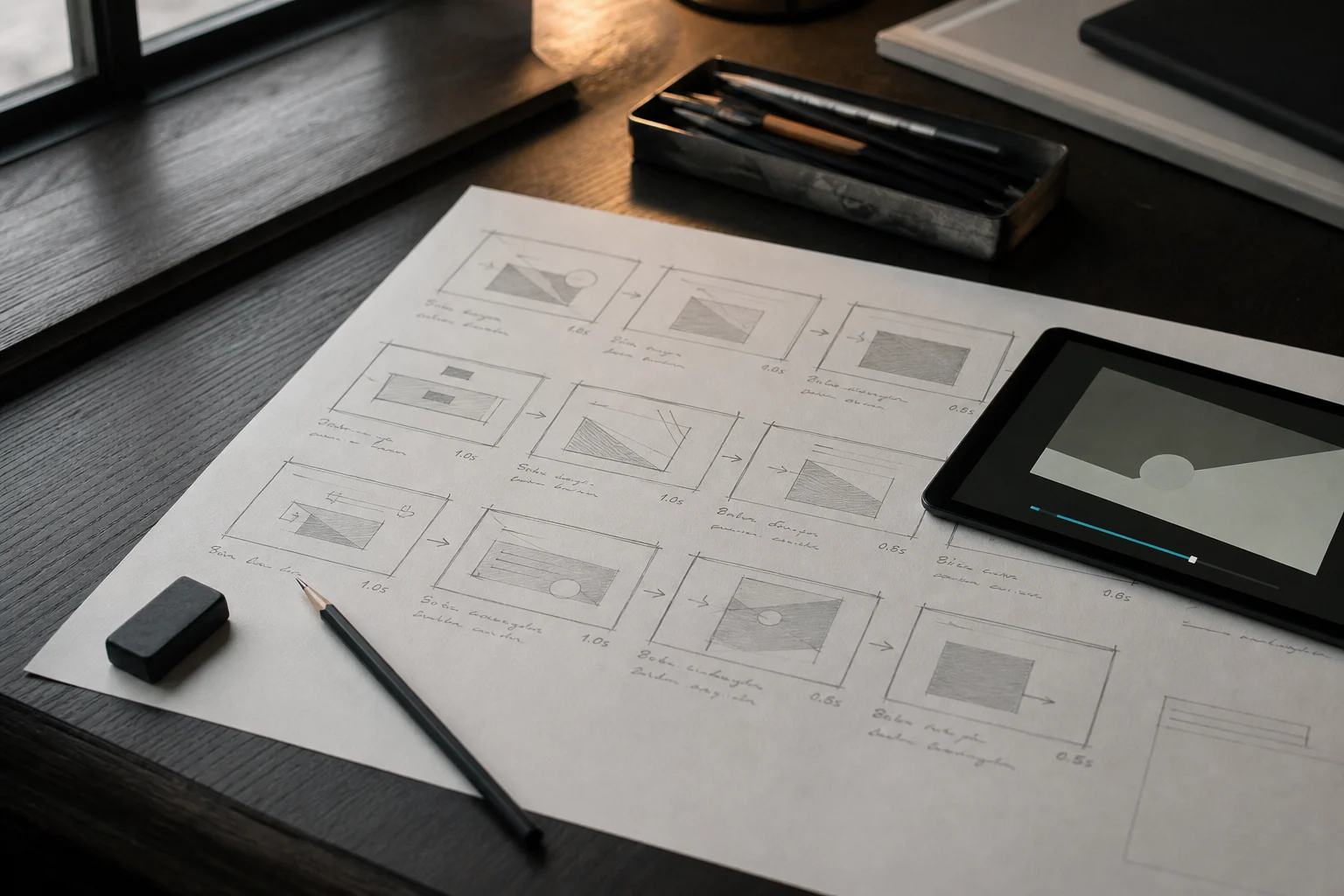
Good motion explains change, reinforces hierarchy, and knows when to stay still.
Use motion to clarify cause and effect. Keep durations short, avoid blocking interaction, respect reduced-motion preferences, and make sure content remains understandable without animation.
Give motion a job
A transition should show where an element came from, what changed, or where attention belongs. If it does none of those things, it is probably decoration.
Design the still state first
Every interface needs to work before motion arrives. Strong hierarchy, focus order, and readable content make animation an enhancement instead of a dependency.
Respect different nervous systems
Reduced-motion settings are not a request for an empty experience. Replace large movement with opacity, instant state changes, or a calm alternative.
Questions that follow.
Simple interface transitions often work between 150 and 350 milliseconds. Larger contextual changes can take longer when they remain interruptible.
It can be when content is available without it, motion is restrained, and reduced-motion settings are respected.
No. Repetition quickly becomes noise. Use reveal motion where it supports pacing or orientation.