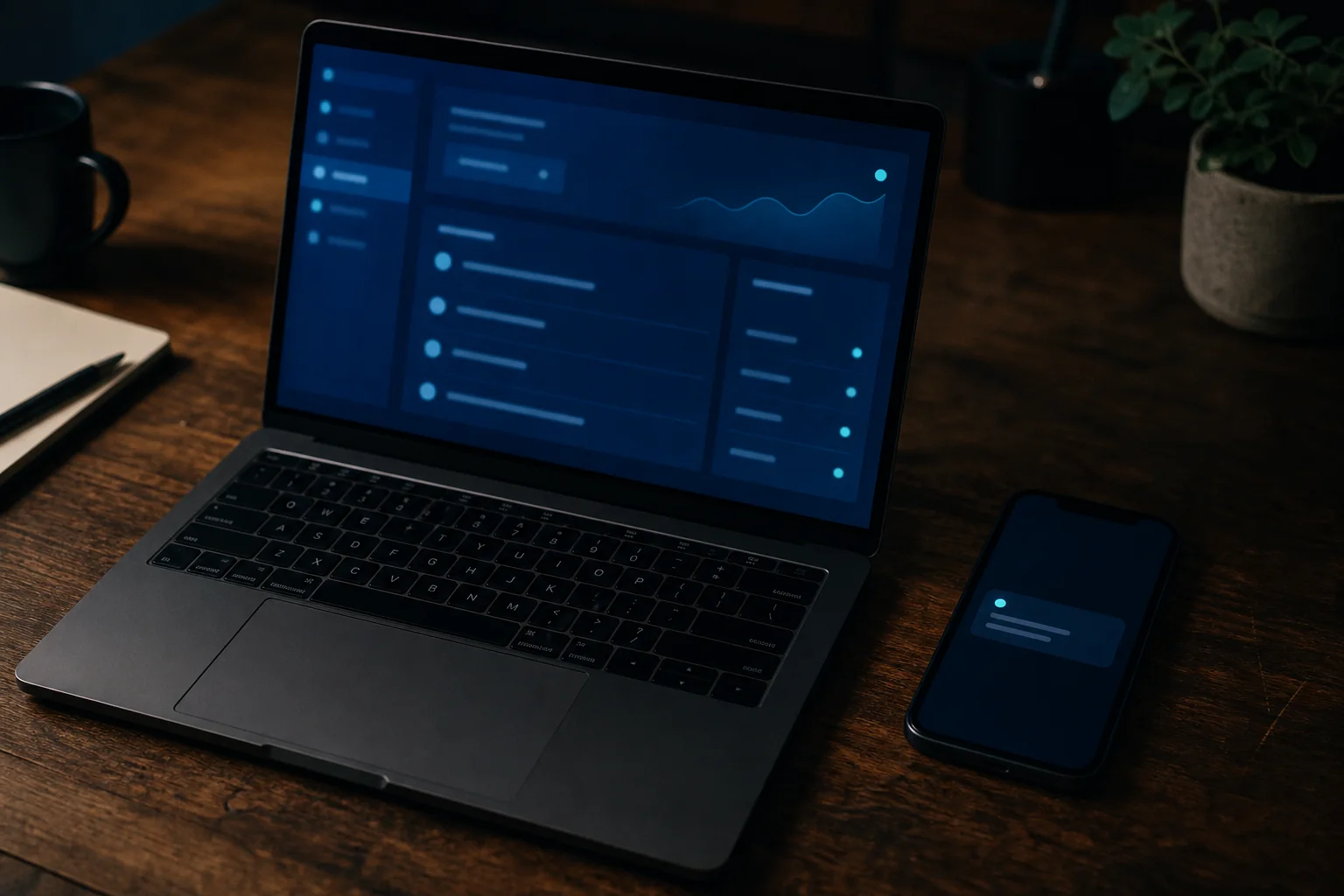
A useful portal separates trackable work from conversation and makes ownership, status, decisions, and next steps visible without another meeting.
Use a portal to give requests a stable owner, status, priority, decision history, and next action. Keep messages available for discussion, but do not make an inbox the only place work can be found. The portal should reduce status chasing, not add another decorative dashboard.
Email mixes conversation with trackable work
An inbox is good at sending a message to people. It is weak at representing the current state of a request across time. Decisions split into branches, attachments lose context, ownership changes silently, and the latest status depends on who remembers the thread. Search can recover messages, but it does not create a shared operating view.
Requests and messages are different objects
A request has a desired outcome, owner, priority, status, history, and completion condition. A message contributes context or asks a question. Keeping those objects connected but distinct lets a team discuss the work without making the discussion itself the system of record.
Visible status requires more than dashboard numbers
A status label is useful only when its meaning is shared and the next action is clear. Show what is active, who owns it, what is waiting, which decision is needed, and when the state last changed. A client should be able to understand the work without translating an internal production board.
Async is usually stronger than instant chat
Most project questions benefit from context, a considered response, and a durable record. A promise of instant response encourages interruption without guaranteeing resolution. Async communication can still be responsive when expectations, urgency paths, and review windows are explicit.
Evaluate whether the experience is substantive
Ask a prospective partner to show how a request enters the system, how priorities change, where decisions live, what the client can see, and how completed work is documented. A portal earns its place when it changes coordination. A branded home screen that sends every action back to email does not.
Questions that follow.
No. Email remains useful for notifications and simple conversation. The portal should hold the durable state of work, decisions, files, and ownership so email is not the only record.
Not always. A short, simple engagement may work with a clear shared document. Use a portal when requests, stakeholders, files, or ongoing priorities create enough coordination cost to justify it.
A small system can be enough: requests with owners and statuses, threaded context, files, decisions, notifications, and a clear view of what needs attention next.